De Paris à New York, un exemple à méditer de rétro-action

/image%2F1527421%2F20161022%2Fob_5f2a1f_graphic-affiche-noir.jpg)
_

Après deux autopsies, beaucoup de silences, d’incohérences et de versions contradictoires, on ne connaît pas encore les causes et les conditions de la mort du jeune homme interpellé par la gendarmerie dans le Val-d’Oise. Mais son cas en rappelle beaucoup d’autres, depuis cinquante ans.
Mort suspecte, omission de faits, versions contradictoires… Ce type de scénario se répète depuis des décennies autour de corps sans vie entre les mains de la police. Les conditions de la mort d’Adama Traoré font ainsi tristement écho à une longue tradition française. Et à voir la chronologie historique de ce genre d’affaires, les proches du défunt n’ont peut-être pas tort de réclamer des réponses claires aux autorités. L’opacité, l’enlisement des enquêtes, l’abandon de poursuites et l’impunité sont souvent la règle, lorsque sont impliqués ceux qui ont « le monopole de la violence légitime ».
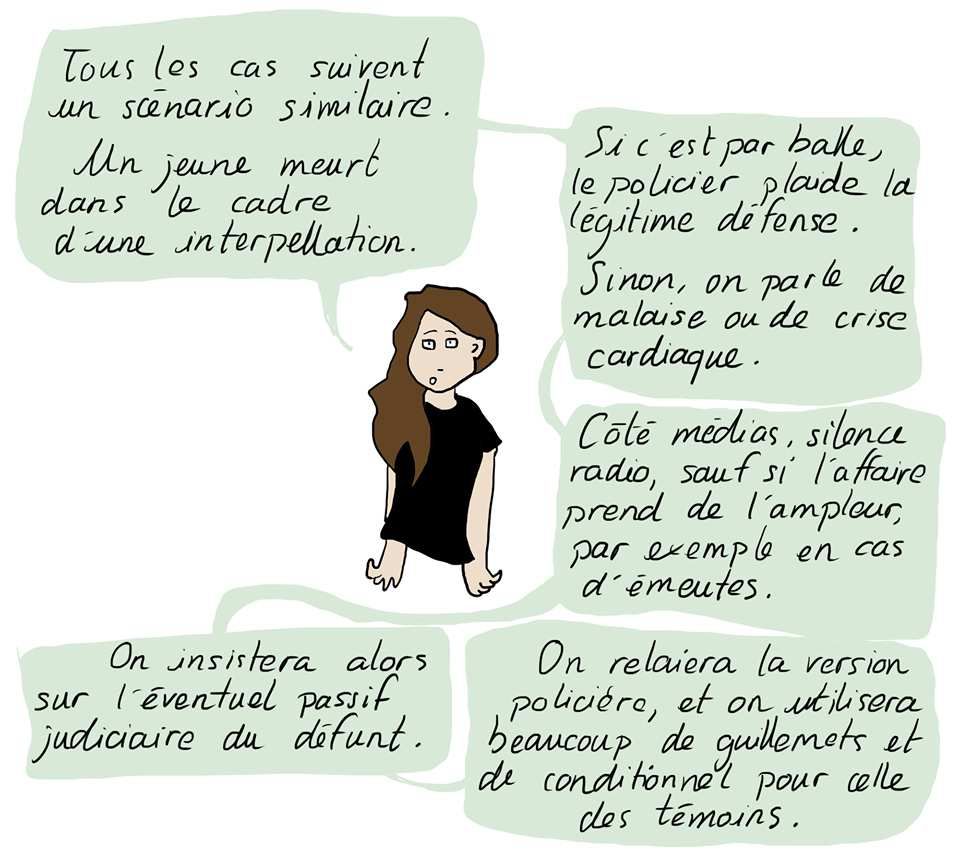
Chaque mois, une à deux personnes meurent lors d’une intervention de la police ou de la gendarmerie. Sur les cinquante dernières années, 420 personnes ont perdu la vie lors d’une intervention des forces de l’ordre (voir la frise chronologique éditée par BastaMag!), hors opérations dites antiterroristes. En 2016, Adama Traoré est le huitième individu à succomber à une action des forces de l’ordre. Sur ces 420 cas, ils sont une soixantaine à avoir officiellement succombé à un « malaise », soit un arrêt cardiovasculaire, alors qu’ils se trouvaient entre les mains de la police ou de la gendarmerie, dans un véhicule de police ou dans la cellule d’un commissariat.
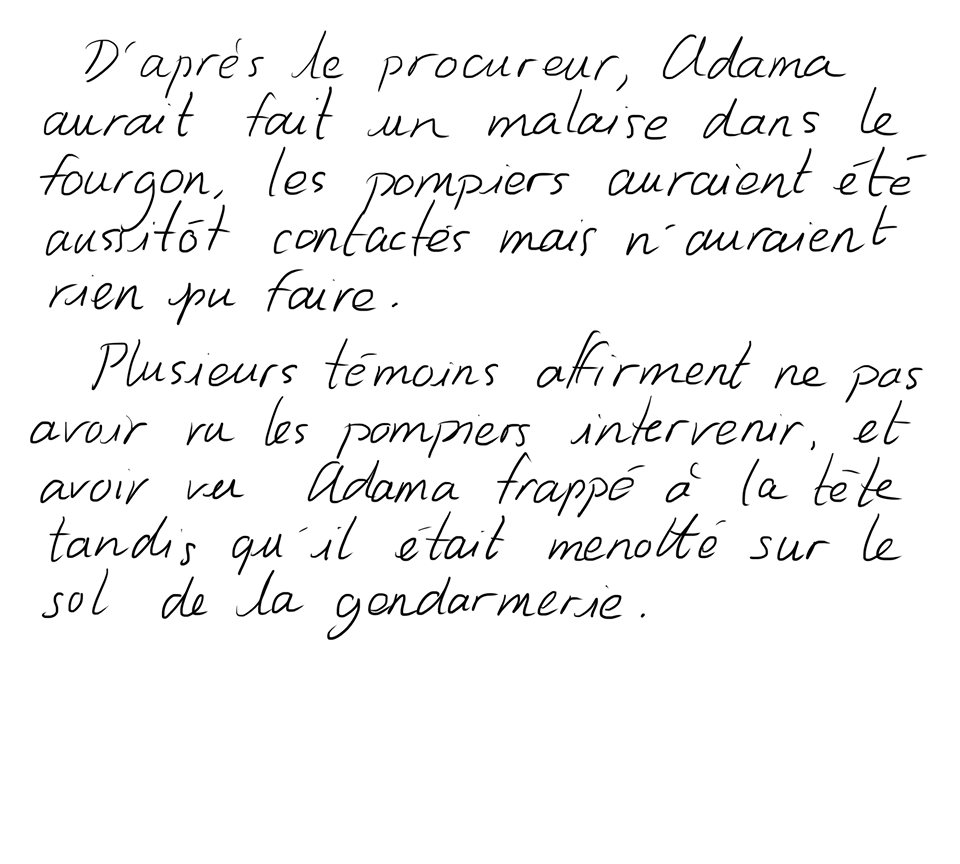
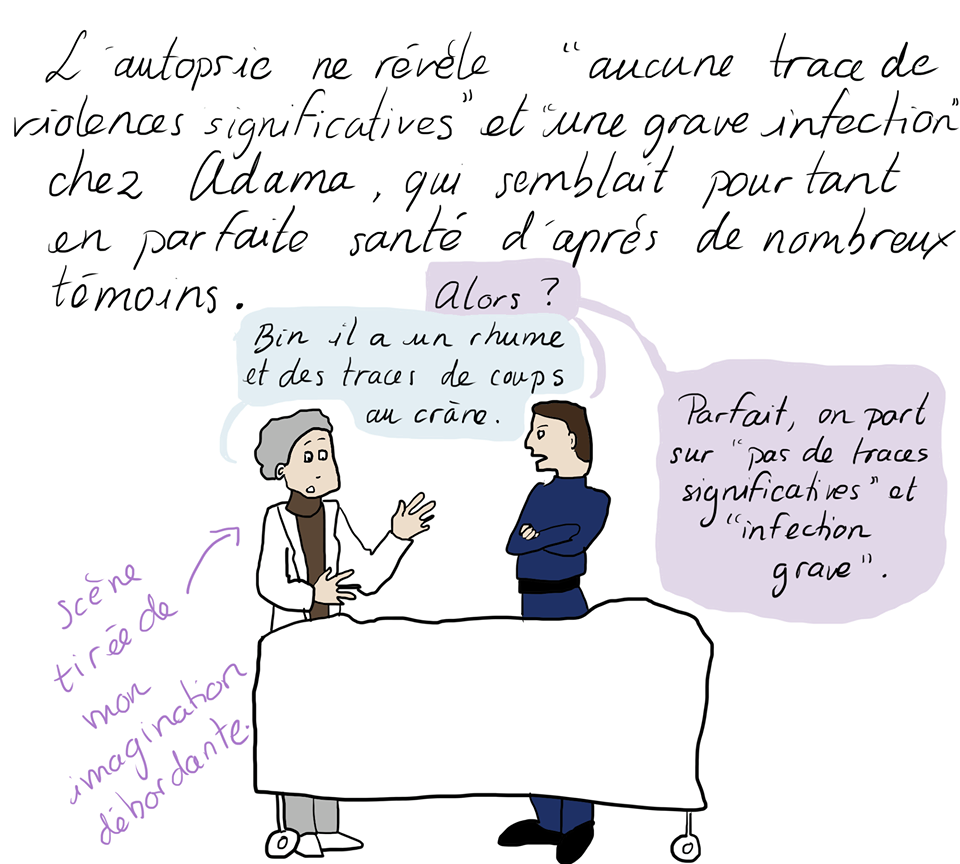
À quoi ces arrêts cardiaques seraient-il dus ? À propos d’Adama Traoré, le procureur de la République a d’abord parlé d’« infection d’organe touchant plusieurs organes » puis a évoqué une « pathologie cardiaque ». Avant que la deuxième expertise médicale n’avance finalement un « syndrome asphyxique ». Dans plusieurs interpellations dramatiques précédentes, les policiers concernés ou le parquet se sont déjà empressés d’imputer l’issue tragique de l’interpellation à l’état de santé fragile du concerné ou à sa morphologie.
Par exemple, Louis Klinger, emmené, menottes aux poignets, en 2010 dans un fourgon de police, se serait soudainement effondré à cause d’une « calcification au cœur ». Idem pour cet homme arrêté en 2011 gare Saint-Lazare en raison de son agressivité, victime d’un infarctus, alors qu’il est menotté et entouré de policiers. En 2013, un procureur écarte également « toute intervention extérieure à l’origine du malaise » d’un homme de 55 ans qui finit ses jours dans une cellule de dégrisement à Bordeaux. Les circonstances de la mort restent floues. Une enquête administrative est confiée à l'IGPN. À notre connaissance, la suite n’a pas été rendue publique.
Dans de nombreux autres cas, magistrats et médecins légistes n’ont pas hésité à conclure à une « mort naturelle » malgré les zones d’ombre. Mort naturelle pour cette femme en 2012, prise d’un malaise lors d’une perquisition de son domicile. Mort naturelle tenue secrète durant deux semaines pour cet homme en 2007, retrouvé inanimé dans un commissariat de Rouen. Mort naturelle encore, selon le juge qui classe l’affaire Ricardo Barrientos, cet Argentin sans papiers mort étouffé lors de sa reconduite à la frontière en 2002. Tous seraient en proie à une crise cardiaque, à une hypertension, à une malformation. Voire à une « rupture de l’aorte, déjà fragile, liée à une maladie génétique », à propos du décès d’Abdel el-Jabri, à Aulnay en janvier 2012 après un contrôle d’identité.
En clair, il n’y aurait aucun lien entre le décès d’un individu et l’intervention policière dont il a fait l’objet. Même lorsque nombre de ces morts demeurent consécutives à une arrestation musclée ou à un étouffement. Tel serait le cas lors de l’arrestation d’Adama Traoré, à en croire les auditions des gendarmes impliqués. « Il a pris le poids de nos corps à tous les trois », admet un militaire à propos des derniers instants d’Adama. Avant d’ajouter qu’ils ont « employé la force strictement nécessaire pour le maîtriser ». L’avocat de la famille suspecte fortement l’emploi de violence à l’encontre de ce dernier. À la suite de ces révélations, la presse s’est indignée de la communication sélective de la part du procureur, qui dit n’avoir constaté aucune trace de violences significatives, conformément aux résultats de la deuxième autopsie.
Ce procédé de communication parcellaire des informations a tendance à se répéter. Comme le montre par exemple la bataille d’expertises autour de l’arrêt cardiaque mortel de Wissam el-Yamni, neuf jours après son interpellation le 31 décembre 2012. Au lendemain de sa mort, le procureur de Clermont-Ferrand exclut tout traumatisme lié à des violences policières. Un rapport de l’IGPN mettra en cause les conditions d’interpellation, tandis qu’un rapport d’autopsie évoque une mort liée à un « cocktail toxique » d’alcool et de drogue. Une autre expertise explique les marques de strangulation sur le corps par le frottement des vêtements. Il faudra attendre quatre ans pour qu’une contre-expertise indépendante démente toute emprise de drogue. La mise en examen d’un des policiers est cependant annulée. L’affaire est toujours en cours.
Les méthodes policières d’interpellation sont également au cœur des questionnements, pour Adama Traoré comme pour de nombreux autres cas tragiques. En cause : les techniques d’immobilisation. Interdite dans plusieurs pays comme la Suisse, la Belgique ou les États-Unis, et régulièrement épinglée par Amnesty International ou le défenseur des droits, l’« asphyxie posturale » est à l’origine de plusieurs fins de vie prématurées depuis le début des années 2000. Elle a notamment été utilisée lors des expulsions d’immigrés en situation irrégulière. Dernier « sans-papiers » en date à en avoir fait les frais : l’Algérien A. Gorradia, en août 2014. Ali Ziri, ce chibani de 67 ans arrêté à Argenteuil en 2009 lors d’un contrôle d’identité a quant à lui été « plié » en deux. Il meurt deux jours après à l’hôpital. L’autopsie relève 27 hématomes sur son corps et révèle une mort par « arrêt cardiocirculatoire d’origine hypoxique généré par suffocation et appui postérieur dorsal ». Un non-lieu, confirmé par la Cour de cassation en 2016, est prononcé en faveur des policiers.
En 2008, Hakim Ajimi s’est aussi éteint devant six témoins sous le poids de deux agents de la BAC. Ceux-ci font pression sur sa poitrine et sa nuque avant de le transporter dans le véhicule de police. À l’arrivée, la mort de Hakim est constatée. L’autopsie conclut à une mort par « asphyxie mécanique lente avec privation prolongée en oxygène ». En janvier 2012, le tribunal correctionnel de Grasse condamne trois policiers à des peines de prison avec sursis de six, dix-huit et vingt-quatre mois, et relaxe les quatre autres agents. Pour Lamine Dieng, mort étouffé en 2007 dans un fourgon de police à Paris sous le poids de cinq policiers, une première autopsie parle d’« éthologie toxique » due à une consommation de drogue, avant qu’une contre-expertise ne conclue à une « compression thoracique et crânienne ». Un non-lieu est prononcé en juin 2015.
L’on pourrait multiplier les exemples de ces morts sans explications. Hakim Djelasi en 2009 à Lille succombe à un arrêt cardiaque. L’autopsie ne permet pas d’identifier les causes réelles de la mort. Les versions de la police et de la famille ne concordent pas. Des hématomes sont relevés sur son corps. En 2009 encore, Mohamed Boukrourou meurt d’un arrêt cardiaque à la suite d’une arrestation à Valentigney (Doubs). Des traces de coup sont repérées, la famille porte plainte. Résultat ? Non-lieu.
Une opacité qui n'aide en rien
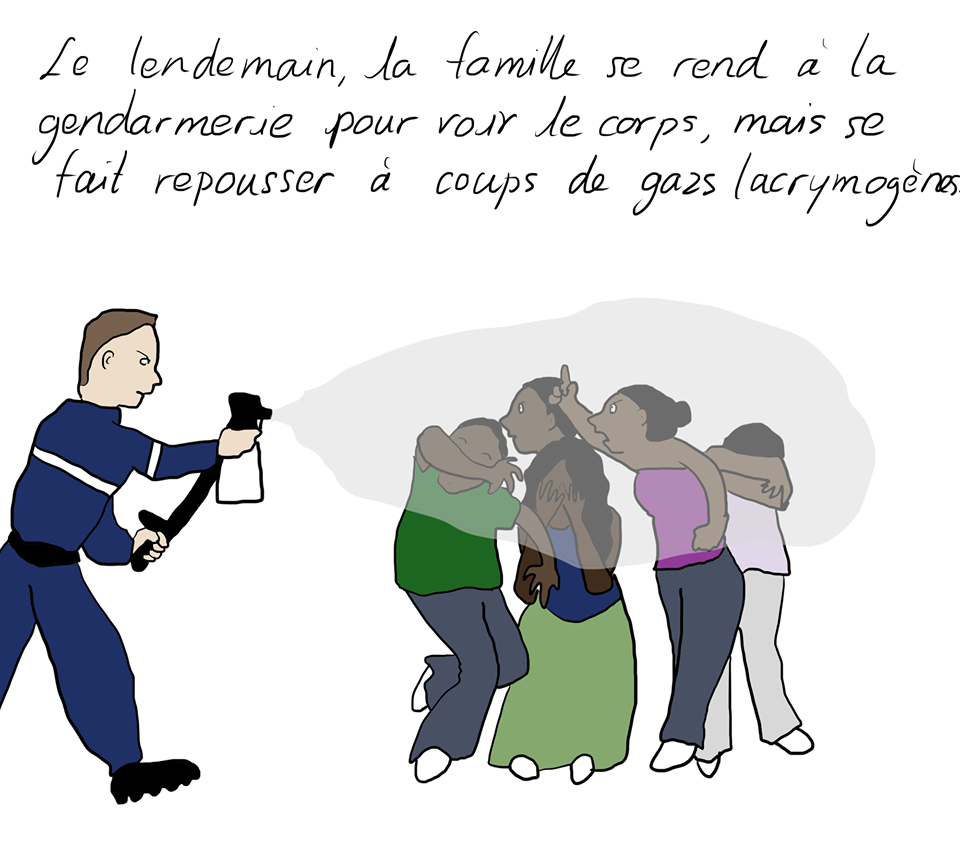
Les similitudes entre l’affaire Traoré de 2016 et une multitude d’autres interpellations ayant mal tourné ne s’arrêtent pas là. Rares sont en effet les cas où la version initiale, largement médiatisée, n’est pas contestée par des contre-expertises médicales, des témoins de l’interpellation, ou la famille ayant vu le corps sans vie. Traces d’ecchymoses ou de blessures, rétention d’information, disparition de preuves, dissimulation de documents entourent beaucoup d'exemples passés, dont une bonne part ont pour point commun de s'être produits dans des commissariats.
Le cas le plus emblématique est sans doute celui de feu Abou Bakari Tandi à Courbevoie en 2005, maintes fois dénoncé par Amnesty International. Mais déjà en 1969, Charles Moncomble, artisan couvreur, est placé en garde à vue dans les bureaux de la gendarmerie de Lille. Il aurait été pris d'un malaise le lendemain, selon la version policière. Les gendarmes auraient appelé un médecin avant qu'il ne soit hospitalisé. Des témoins affirment qu'il était déjà mort en arrivant à l'hôpital. Les résultats de l'autopsie ne sont pas divulgués à la veuve de la victime, au motif du « secret médical ». Lors de l'identification du corps à la morgue, celle-là voit le visage de son époux tuméfié, et un liquide saumâtre sort de sa bouche. Des traces violacées sont également constatées sur le thorax. L'information ouverte par le parquet de Lille se solde par un non-lieu et l’affaire est classée.
Cinq ans plus tard, en 1974, c’est Vincent Recco qui meurt d’un œdème pulmonaire dans un commissariat de Marseille. Après avoir découvert le nez du trépassé écrasé ainsi que des traces sur les poignets, la famille porte plainte. La suite n’est pas connue. C’est aussi le cas de Ouardia Aoudache dans le Jura en 1984. Plus récemment, le décès d'Amadou Koumé est constaté au commissariat du Xe arrondissement, malgré les tentatives de réanimation des secours. L’homme de 33 ans venait d’être arrêté par la BAC devant un bar. Les parents sont informés trois jours plus tard. L'affaire ne sort dans la presse que plusieurs semaines après les faits. La famille demande un éclaircissement des circonstances. On lui refuse d'accéder au résultat de l'autopsie. Après avoir constaté une plaie au visage sur le corps sans vie, elle porte plainte contre X pour « violences volontaires ayant entraîné la mort sans intention de la donner ». Un juge d’instruction est nommé un an après les faits.
À supposer que la personne interpellée ait initialement une fragilité quelconque (cardiaque ou asthmatique), comment expliquer que ces malaises se produisent pendant une intervention ? De plus, policiers et gendarmes s’en inquiètent-ils avant de procéder à une neutralisation, eux qui sont censés « préserver de toute forme de violence et de tout traitement inhumain ou dégradant » la personne placée sous leur protection, selon leur code de déontologie (et notamment l’article R. 434-17) ? Il arrive que l’état de santé puisse être déterminant dans le décès des victimes. Ce peut être le cas lors des placements en cellule de dégrisement pour état d’ébriété ou prise de stupéfiant. Mais, là encore, l’opacité n’aide en rien les proches des victimes à lever le voile sur la responsabilité des forces de l’ordre.
Prenons l'exemple de Serge Mocik, interpellé à Paris en 1984 alors qu'il vient de se “shooter”. Il meurt à l'hôpital après avoir passé vingt heures au commissariat, durant lesquelles son état de santé est jugé alarmant. Les parents du jeune homme se constituent partie civile et portent plainte pour coups et blessures et non-assistance à personne en danger. Un non-lieu est prononcé (source : Le Canard enchaîné, 11 juin 1986). Même doute pour Farid el-Orabi en 1986 à La Rochelle, mort à cause d’une prise de stupéfiant. Un témoin assure qu'il y a eu violences et coups de la part des policiers. La famille porte plainte contre X avec le soutien du Mrap (source : Libération, 18 décembre 1986). La suite ? Inconnue.
Il en va de même pour Cyril Cozic en 2014, découvert sans vie au petit matin dans la gendarmerie de La Queue-lez-Yvelines, à la suite d'un malaise hépatique. Lors de son interpellation pour conduite en état d’ivresse, la famille avait pourtant prévenu les gendarmes que l’homme était cardiaque. Pillail Manickavasakar, lui, souffrait d’hypertension quand il a été placé en garde à vue. Ce restaurateur sri lankais naturalisé français perd la vie à la suite du refus des douaniers de lui administrer les médicaments qu’il avait sur lui. Une plainte est déposée au parquet de Valenciennes. La suite judiciaire n'est pas connue.
Manquement aux soins, erreur de diagnostic, non-assistance à personne en danger sont souvent pointés par les proches. Pour rappel, le code de déontologie de la police stipule bien que « le fonctionnaire de police ayant la garde d’une personne dont l’état nécessite des soins doit faire appel au personnel médical et, le cas échéant, prendre des mesures pour protéger la vie et la santé de cette personne ».
Joseph Petithuguenin sera placé en garde à vue dans le cadre d’une enquête sur une affaire de daims empoisonnés. Cet ancien ouvrier de chez Peugeot, âgé de 77 ans, est malade. Il décède dans la nuit. La famille pense qu'il a succombé à cause de son état de stress, lié aux conditions de sa détention. Un gendarme, condamné à trois mois de prison avec sursis par le tribunal correctionnel de Besançon, est finalement relaxé par la cour d'appel en octobre 2012
Dans certains cas, l’état de santé de la victime ne suffit pas à dédouaner les fonctionnaires de l’ordre public. Ainsi d'Aïssa Ihich, 18 ans, arrêté en 1991 à la suite d'affrontements entre policiers et jeunes de la cité du Val-Fourré dans l'Essonne. La famille apporte ses médicaments au commissariat, pour soigner le jeune homme qu’elle sait asthmatique. Les policiers refusent de les lui administrer en l'absence de consignes du médecin. Ce dernier avait assuré que l'état de santé d’Aïssa était compatible avec son maintien en garde à vue, sans mentionner qu'il était asthmatique. Le lycéen décédera précisément d'une crise d'asthme, selon la version officielle. Après onze ans de procédure, les policiers sont condamnés en 2002 à huit mois de prison avec sursis pour non-assistance à personne en danger. Le médecin est inculpé d'homicide involontaire et condamné à un an de prison avec sursis.
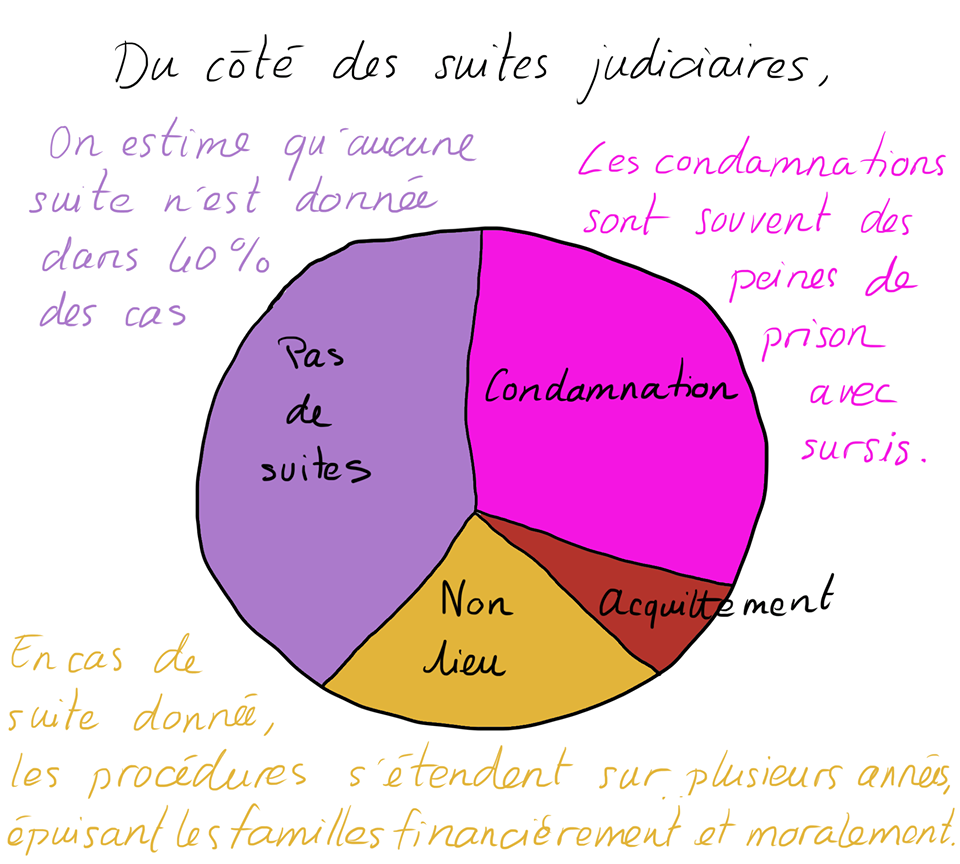
Ce type de condamnation, même tardif, reste exceptionnel pour ne pas dire rarissime. Sur la soixantaine des malaises fatals, la condamnation à de la prison assortie de sursis a été prononcée dans cinq affaires. On dénombre une quinzaine de non-lieux, trois classements sans suite et deux relaxes ou acquittements. Six affaires sont toujours en cours. Dans la moitié des cas, la suite judiciaire n’est pas connue.
Dans l’affaire concernant Adama Traoré, l’enquête de l’Inspection générale de la gendarmerie nationale devra déterminer si les fonctionnaires ont agi selon un « usage proportionné de la force ». Leur sanction administrative dépendra en partie de l’écart entre la violence exercée lors de l’arrestation et sa légalité prévue par le règlement. Mais au-delà des responsabilités individuelles des agents, certaines morts, jugées illégitimes au yeux d’une partie de l’opinion, sont la conséquence de pratiques répressives jugées légales par l’institution. Sans que celle-ci n’y trouve rien à redire depuis des décennies.
http://pcfob.centerblog.net/1519-avant-adama-traore-ces-etranges-malaises

BEAUMONT-SUR-OISE, France — His name was Adama Traoré, a 24-year-old black construction worker who loved soccer and spent the summer aching for the much-anticipated French victory in the Euro 2016 finals that never came.
For Adama, what did come this summer was death in police custody on July 19, his birthday. According to police documents shared with select French media outlets, Adama and his brother, Bagui, were stopped on their bikes that afternoon in the center of this small town, which is about an hour north of Paris. The police were after Bagui, wanted in connection with an extortion case.
But when Adama fled the scene, three officers ultimately subdued him by pouncing on his back all at once. By the time they arrived at the station, the officers said Adama was not breathing. He was immediately pronounced dead, but his older brother, Lassana, said in an interview that Beaumont police then told the family they could bring their brother a sandwich while he was held.
The Traorés brought the sandwich to the station, recalled Lassana, 39, a real estate agent, in a cafe near the family’s home. It was nearly five hours after Adama’s arrest before they learned the truth, when, as Lassana said, the authorities first blamed the death of the recreational athlete on a cardiac condition, then on a serious infection. An independent autopsy the family later commissioned suggested the cause of death was asphyxiation.
For several hours, Lassana said, Adama’s “body was in the courtyard of the police station, in the parking lot, on the ground — like a dead dog.”
If that image might seem to some as tragically commonplace in the United States in 2016 — where, according to data collected by The Washington Post, 573 people have already been killed by police this year, nearly 40 percent of them people of color — in France, it has caused some to question the way the country sees itself.
In the weeks since July 19, the question of how Adama died has turned attention on police brutality and structural racism in a proudly egalitarian society that considers itself so institutionally color-blind that it refuses — per a 1978 law — even to collect data on race or ethnicity in annual censuses or government-sponsored research.
To the French state, race — as a quantifiable category but also a separate social experience — is not supposed to exist. In 2013, for instance, the country’s National Assembly passed a bill that would have completely removed the word “race” from the country’s constitution. The bill never became law, but its essence remained: in France, there are no distinct races, only equal citizens.
The case of Adama Traoré is not the first to call into question this long-held ideology of national identity and to suggest that race, perhaps, has mattered all along. In 2005, for instance, two minority teenagers were killed after a police chase in the Paris suburbs as they left a soccer game, triggering weeks of riots across France.
But this time, a local incident has intersected with an international current, translating “Black Lives Matter” into French and galvanizing a message increasingly global in its appeal.
[Sometimes it takes an outsider to crystallize America’s enduring racism]
This month, with the international spotlight on the Olympics in Rio de Janeiro, protesters have condemned the routine police killings of black civilians across Brazil. There have been similar demonstrations in Norway and Britain, where, last week, demonstrators invoking the Black Lives Matter message obstructed traffic into London’s Heathrow airport. In Canada recently, over 500 people marched in Ottawa to protest the death of a mentally ill black man after his arrest.
When about 600 protesters joined France’s first-ever Black Lives Matter demonstration in Paris four days after Adama’s death, they were taking part not only in what was couched as an international intervention against anti-blackness but also against what Fania Noël, 29, a founding member of the movement here, called France’s “Republican mythology.”
Born in Haiti, Noël moved to France at age 3 and grew up in a housing project in the distant Paris suburb of Cergy, not far from where Adama died last month. She described her family as the “nightmare of the French right”: low-income, immigrant and black.
“We never lived the illusion of integration,” she said.
For her, France’s “mythology” is largely the widespread assumption among the predominately white elites here that race is no longer applicable in a country that was once a major slave trader and the seat of an empire that spanned much of North and West Africa, North America, Southeast Asia and the Caribbean.
The French government’s rationale for not officially recognizing race largely stems from the still-bitter memories of World War II, when the country’s government collaborated with Nazi Germany to single out French Jews on ethnic grounds. But critics of the policy today insist that banishing data on race did not banish racial discrimination.
“Race doesn’t exist — unless you need a job, an apartment, to get into school or if the police stop you,” Noël said.
Annette Davis, another organizer of Black Lives Matter in France, criticized what she sees as the more general problem of the French government’s refusal to accept that people of color can experience life differently.
“It’s essentially propaganda,” she said, referring to the French government’s particular definition of equality. “ ‘We are all human, colors do not matter, and secularism,’ but redefined in a really manipulative way: not having a religion, but really just not being too authentically Muslim.”
“There is this idea that we need to integrate ourselves, to assimilate and become as white as possible. Yet this is a country that colonized so much of the world, and there are so many black and brown faces in France. There’s a colonial past, but there’s also a colonial present.”
[Why some whites are waking up to racism]
On the specific question of police brutality, about two weeks before Adama’s death, France’s National Assembly had rejected an amendment to a bill that would have required police to issue a written record every time they stopped someone on the street — including the legal basis for that stop.
Advocates had hoped these records would provide a more accurate picture of suspected racial disparities that, at present, no data exist either to substantiate or disprove. For now, only the perception of police impunity lives on, a perception that cannot be challenged in any court.
In January 2012, Wissam El-Yamni, 30, died after nine days in a coma that followed his arrest early in the morning of New Year’s Day.
For his brother, Farid, 30, an engineer, what matters most is that, as in the case of Adama Traoré, police officials never provided accurate information at any point in the days that followed, blaming his death on medical problems that could not later be verified.
“When the authorities lie, they’re saying that we don’t merit truth, and that we don’t matter,” he said in an interview. “You say, ‘I exist.’ But they say, ‘You don’t exist — you’ve never existed, in fact.’ ”
Farid said that he worries France’s current political climate — an atmosphere of heightened national security after three major terrorist attacks in the past year and a half — could prevent any lasting change to the country’s policing culture.
“There’s the idea that fighting police violence is somehow being against security,” he said. “But they’re not contradictory.”
Despite what she described as the success of France’s first Black Lives Matter rally, Noël said that there has been little substantive engagement from either French government officials, public intellectuals or journalists in the same way that there was during the widespread protests triggered by a controversial labor law earlier this year.
“With ‘Nuit Debout,’ ” she said, using the French name for those protests, “even if they were criticized, they were still taken seriously — they’re still political subjects. We’re viewed as a band of barbarians, like colonial subjects, except this time of the interior.” A majority of the Nuit Debout protesters, she said, were white.
Most of the debate in French media on the Traoré cased has focused on the legal nature of police practices rather than on the question of structural racism.
In a cafe in Beaumont, Lassana Traoré said that, regardless of the publicity, his family still feels ignored, having received no official condolence or acknowledgment from the French government.
As a result, Lassana said, they have arranged for Adama’s body to be transferred to Mali, the country where their father was born.
“He died here in a manner far too complicated,” he said of his brother. “He can rest in peace in Africa.”

Aujourd'hui, une contre autopsie a été menée à la demande de la famille pour déterminer les causes de la mort d'Adama Traore, mort dans les mais de la gendarmerie après son interpellation il y a une semaine. Elle a conclu de nouveau à des causes inconnues. Le procureur va même jusqu'à incriminer la canicule...
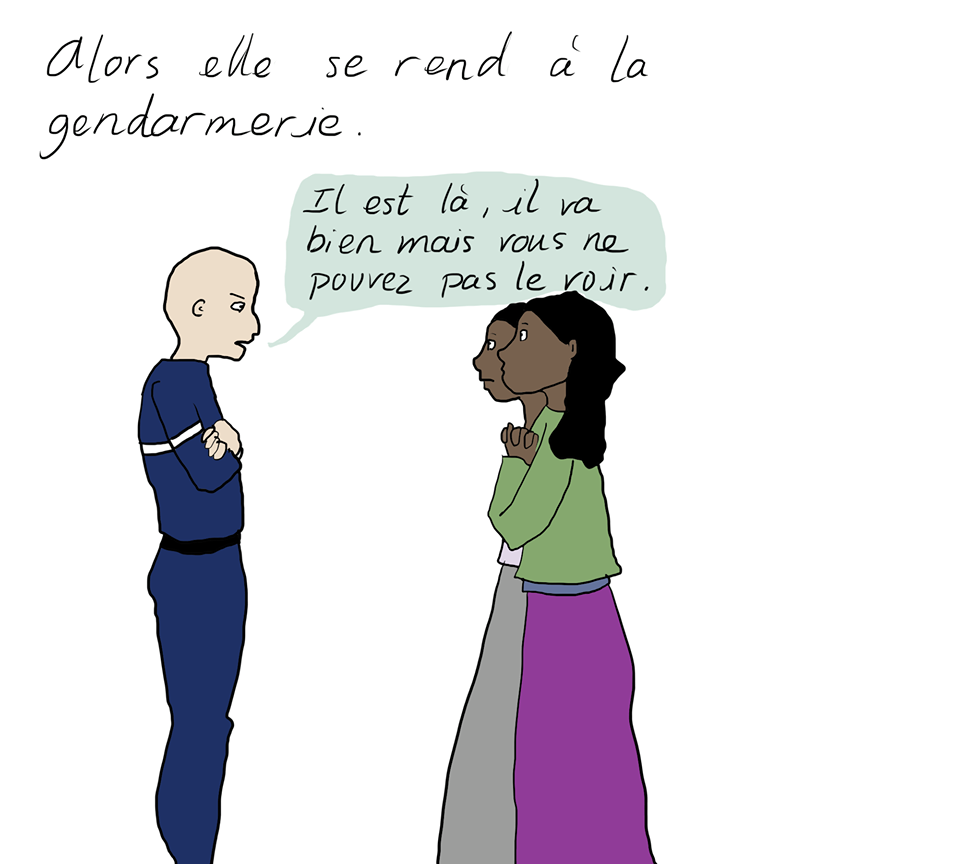
Hélas, l'histoire nous l'a appris, les experts aux ordres vont bien souvent dans le sens des mensonges policiers pour couvrir l'institution.
Et ça fait mal, que la vérité ne sorte jamais dans ces cas-là. Pour s'en rappeler, on écoute le récit de Farid, frère de Wissam El Yamni mort dans des circonstances très proches la nuit de la Saint Sylvestre 2012, et sur qui on a pratiqué les mêmes autopsies bidon pour aboutir à une totale impunité policière, comme toujours.

«Black Lives Matter in France, Too» : dans un éditorial, qui reprend en titre le nom du mouvement de lutte contre les violences policières né aux Etats-Unis, le New York Times dénonce le comportement de la police française dans l'affaire Adama Traoré – ce jeune Noir décédé le 19 juillet lors de son interpellation à Beaumont-sur-Oise (Val-d’Oise).
Le décès de ce jeune homme de 24 ans, dont la mort reste toujours sans explication officielle, alors que deux expertises font état d’une «asphyxie», a entraîné «de violents affrontements entre les minorités en colère et des officiers de police», rappelle le quotidien américain, qui dresse un parallèle avec les émeutes d'octobre 2005 déclenchées après la mort de Zyed et Bouna dans un transformateur EDF à Clichy-sous-Bois - dossier dans lequel les deux policiers poursuivis ont d’ailleurs été relaxés, rappelle le quotidien.
Depuis, les manifestants ont repris à leur compte le mouvement Black Lives Matter, né de l'autre côté de l'Atlantique, se félicite le New York Times, qui ne s'étonne pas de cette réappropriation : «Il y a des différences importantes entre les histoires des relations interraciales aux Etats-Unis et en France, où le racisme prend racine dans le passé colonial français, explique le quotidien. Cependant, il n'est pas surprenant que le mouvement Black Lives Matter trouve un écho en France : les organisations de défense des droits de l'homme ont fait état ces dernières années d'une culture d'impunité, profondément ancrée au sein de la police française, et donnant lieu à des abus à l’égard des minorités», détaille le quotidien américain, qui cite notamment une étude de 2009 sur le délit de faciès, selon laquelle un Noir ou un Arabe (ou perçu comme tel) à six à huit fois plus de chances de se faire contrôler à Paris.
Ce type de discriminations se sont multipliées depuis le début de l'état d'urgence, déclarée après les attentats du 13 novembre à Paris et Saint-Denis, poursuit l'éditorial. Et à l’heure de la lutte contre le terrorisme, la recension des abus policiers contre les minorités ne semble pas non plus être une priorité. Le quotidien américain rappelle également la promesse formulée en 2012 par le candidat Hollande de lutter contre le contrôle au faciès, et la décision inédite, fin juin, de la Cour d'appel de Paris de condamner l'Etat pour des contrôles d’identité réalisés à l’encontre d’hommes noirs ou arabes. Malgré cette mise en garde, les députés ont enterré fin juin l’expérimentation du récépissé, censé lutter contre les contrôles au faciès, notamment après que Bernard Cazeneuve a répété que ce n'était pas le moment de jeter la moindre «suspicion» sur les forces de l’ordre.
«Un argument dangeureux» pour le New York Times, qui appelle la justice française à mettre un terme aux discriminations. «L'État islamique a montré qu’il sait exploiter les sentiments de colère et de l’aliénation à des fins meurtrières», met en garde le quotidien, avant de conclure : «Maintenant plus que jamais, la police a besoin d'instaurer la confiance avec les minorités en respectant les droits de tous les citoyens français, quelle que soit leur religion ou leur couleur de peau, et montrer que la justice doit être appliquée de manière équitable.»
Source :
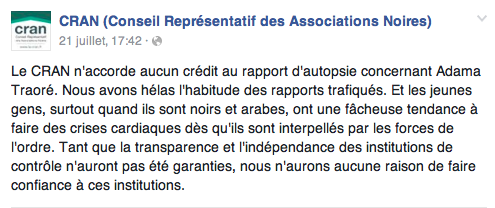








Petit rappel en 2012 Wissam tombait dans le coma suite à une arrestation policière.
Le procureur s empressait de dire à la presse qu'il n avait pas subit de violences et que les causes de la mort ne sont pas les conséquences de violences policières.
Toutes les conclusions médiatisées de la première autopsie étaient fausses.
Wissam n'était pas sous emprise de drogues lors de son interpellation comme l affirmera à repetition le procureur ce que revellera une expertise indépendante.
Il n y avait aucune anomalie cardiaque comme le revellera une autre expertise indépendante.
Au moins 3 fractures ont été oublié sur cette autopsie pendant que des excroissances toutes petites étaient relevées.
Des marques de strangulation dissimulées en marques de frottements de vetements.
Les mensonges ne sont pas simplement médicales : photos antidatees, disparitions enregistrements audios, faux appel téléphonique, criminalisation ...
5 ans après alors que les mensonges sont prouvés, la famille attend toujours la vérité médicale.
http://www.lamontagne.fr/auvergne/actualite/2012/05/16/autopsie-de-wissam-le-parquet-exclut-une-mort-due-aux-coups-des-policiers-video_164827.html


